
Purpose-Built Rare Disease Education: Programs that address the challenges clinicians face
 Think Rare
Rare disease diagnosis and recognition
Rare diseases are often missed because their signs and symptoms can resemble more common conditions, and clinicians may have limited experience recognizing the clinical clues. For many rare diseases, the first and most important educational challenge is simply helping clinicians think of the diagnosis sooner—and understand when additional testing or referral may be warranted.
Think Rare is designed to address this diagnostic challenge through case-based, expert-led education that brings the clinical presentation of rare disease into the context of everyday practice. Programs can focus on recognizing key signs and symptoms, identifying diagnostic clues, understanding appropriate testing and knowing when to refer. The goal is to move clinicians from “I know about this disease” to “I know when I should suspect it.”
For learners, Think Rare provides practical education they can apply when encountering patients with unexplained or atypical presentations. For grantors, the platform provides a focused way to address diagnostic gaps and support earlier recognition of patients who may otherwise remain undiagnosed or misdiagnosed.
 Practice Exchange
Expert perspectives for clinical practice
Rare disease care is often complex, and clinicians may have limited opportunities to learn from colleagues who routinely diagnose and manage these patients. At the same time, new evidence, treatment approaches and clinical experience are constantly evolving. The challenge is not simply providing information—it is translating expert knowledge into practical clinical decision-making.
Practice Exchange brings together recognized rare disease experts to examine real-world cases, emerging evidence and clinical challenges. Through expert discussion, multidisciplinary perspectives and case-based learning, programs focus on how new knowledge can be applied in practice.
For learners, Practice Exchange provides an opportunity to hear how experienced clinicians approach difficult cases and translate evidence into patient care. For grantors, it creates a flexible platform for addressing important clinical practice gaps while leveraging CheckRare’s network of rare disease experts.
 Masterclass
Deep education for complex rare diseases
Some rare diseases cannot be adequately addressed through a single CME activity. Clinicians may need a deeper understanding of the disease, its diagnosis, testing, treatment options and long-term management—particularly when they encounter these conditions infrequently in practice.
Masterclass provides structured, in-depth education around complex rare diseases and important clinical topics. Programs can be developed as multi-part learning experiences that build knowledge progressively, allowing faculty to move beyond the basics and explore the clinical decisions and challenges that matter most in practice.
For learners, Masterclass provides a more comprehensive educational experience that can build confidence and clinical expertise over time. For grantors, it offers an opportunity to support high-value, enduring educational platforms that can address multiple learning gaps within a disease area rather than focusing on a single educational question.
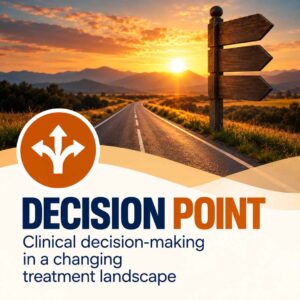 Decision Point
Clinical decision-making in a changing treatment landscape
Rare disease treatment is becoming increasingly complex. New therapies, evolving guidelines, multiple treatment options and emerging clinical evidence can leave clinicians with difficult questions about which treatment approach is most appropriate for a particular patient. Education needs to help clinicians make sense of this information and apply it to real-world decisions.
Decision Point focuses on the moments when clinical judgment matters most. Expert faculty examine treatment options, emerging evidence, guidelines and patient-specific considerations to help clinicians navigate complex therapeutic decisions. Programs can use cases, expert debate, evidence reviews and interactive discussion to explore the rationale behind different approaches.
For learners, Decision Point turns a rapidly changing treatment landscape into practical, clinically relevant guidance. For grantors, it provides a platform for addressing treatment-related practice gaps while demonstrating how expert-led education can help clinicians move from evidence to informed clinical decisions.
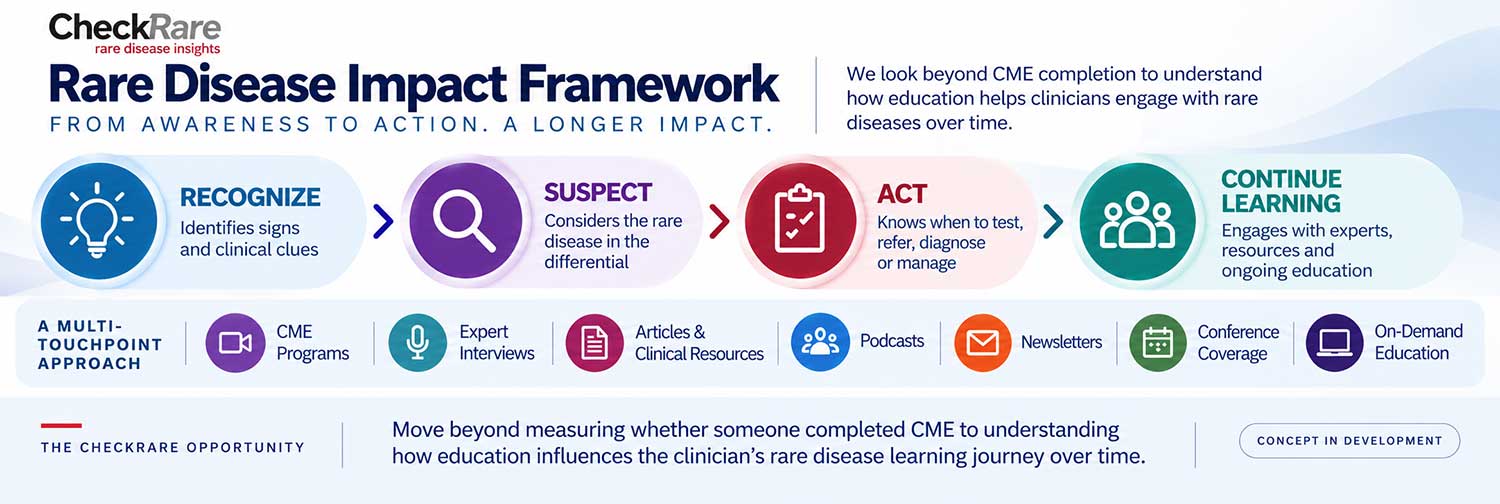
CheckRare Rare Disease Impact Framework
Traditional CME outcomes typically focus on what happens during or immediately after an activity—whether knowledge increased, confidence improved, or learners intend to change their practice. While these measures remain important, they may not fully capture the realities of rare disease education, where a clinician may encounter a patient only occasionally and meaningful impact can begin with simply recognizing that a rare disease should be considered.
The CheckRare Rare Disease Impact Framework looks beyond completion of a single CME activity to the broader learning journey. We focus on how education can help move clinicians from recognizing the clues, to suspecting a rare disease, to taking appropriate action—including testing, referral, diagnosis, and management.
CheckRare is uniquely positioned to extend that learning journey beyond the CME activity. Our education platform connects CME with expert interviews, podcasts, newsletters, conference coverage, clinical resources, and on-demand education, creating multiple opportunities for continued learning and engagement around a rare disease.
CheckRare is developing a rare disease-specific approach to measuring educational impact—one that reflects how clinicians actually encounter and manage rare diseases. The CheckRare Rare Disease Impact Framework goes beyond traditional pre/post-test measures to examine how education, continued engagement, and multiple learning touchpoints influence the clinician’s journey from recognizing a rare disease to taking action.